Found at Houda Point, barely able to move, cold, very dehydrated and thin, almost unable to stand, it took a few days before this Western Screech-owl became fully aware of his surroundings. By appearances, his prospects looked pretty bleak, but after repeated exposure to such patients in this shape, the miracle of fluids, warmth and nutrition when ready can seem commonplace. And one strong reason for his optimistic prognosis was his ability and willingness to eat mice soon after being admitted.
Because he is on the small end of the typical range for the weight and size of Western Screech-owls we surmise that he is male. While it is true for most birds of prey that females are significantly larger than males, sometimes by as much as a third, among screech-owls this difference is less pronounced, with females averaging 13% more body mass than males (1).
 After ten days in care, the small owl’s condition had improved significantly. This is our first photo of him after being moved to an outdoors aviary.
Motor vehicles are the most common cause of injury for all the owls that we see. Last year at Humboldt Wildlife Care Center we treated 50 owls of various species. We know that 26 of these owls had been struck by a vehicle. 24 of the owls we treated were Western Screech-owls. Of these 24, 14 had been hit by a car. Due to the typical severity of injuries car strikes cause, only 5 survived to be released.
While an owl might fly in front of your moving car anywhere, it is important to remember that these nocturnal hunters use the edges of roads to find prey. Maybe before we destroy the world we’ll realize that a good neighbor puts lives before speed. Etiquette and courtesy: why not teach these things first about living in nature?
 With his feet wrapped in cohesive bandage, Dr. Lisa Bartlett of Arcata Animal Hospital examines the owl’s legs while BAX rehabilitation assistant and board member Lucinda Adamson handles for her.
 After 3 weeks in care, the owl was visibly more alert and energetic
This Screech-owl, however was not likely to have been hit by a car. After a few days in care, with varying ability to stand, his legs began to swell. Both legs had multiple small puncture wounds. With antibiotics and anti-inflammatory drugs added to his daily care, he soon improved.
While we’ll never know for sure what caused his injury, we speculate that it was a conflict with another predator, perhaps a feral or free-roaming cat or even another Screech-owl.
No matter the cause, this owl’s injuries healed quickly. A lingering problem with his left hock (analogous to a human ankle) where a puncture from claw or talon was causing apparent pain and swelling took a few weeks and a couple of trips to the veterinarian. Twice we needed radiographs to confirm that the joint was healing and this small owl would be able to carry his dinner (primarily small rodents such as mice and voles) back to his roost or nest. Carrying mice back to his partner is an important part of screech-owl mating. When nesting, the male screech-owl also shares the duties of hunting for the nestlings once the chicks have left the egg(2).
 Our small patient recovers in our newest aviary, built in 2013.
Because a wild animal needs to be in top physical condition to thrive, our concerns regarding the use of his leg required a cautious approach to his release. Besides physical examination and radiographs to make sure that his bones were healthy, we offered live prey to determine that the owl was capable of providing for himself after release.
 Evading capture! While we aren’t trying to cause our patient’s stress, it is nice to see his restored vigor and agility.
 A remarkable feature of owls in flight: near-total silence as they rush past your head!
After another couple of weeks in care, we were sure he was ready. Two BAX/HWCC interns and Kim Hettler-Coleman, our volunteer coordinator, took the owl back to Houda Point, back where he’d been found. After coming back from the release Kim reports, “As he sat in the hollowed out part of the tree, disappearing into his surroundings, all was well, in the owl’s world and mine. Freedom never looked so good … in camouflage!”
 Returned to his rescue location, the owl surveys the situation from a gnarly old Monterey Cypress.
 Our last view of him as we return to our built world and he is free again.
 After releasing the owl, the crew also enjoys a moment with wild Mother Earth.
(1) http://bna.birds.cornell.edu/bna/species/597/articles/introduction
(2) http://animaldiversity.ummz.umich.edu/accounts/Otus_kennicottii/
© 2014 Bird Ally X/ all photos Laura Corsiglia/Bird Ally X
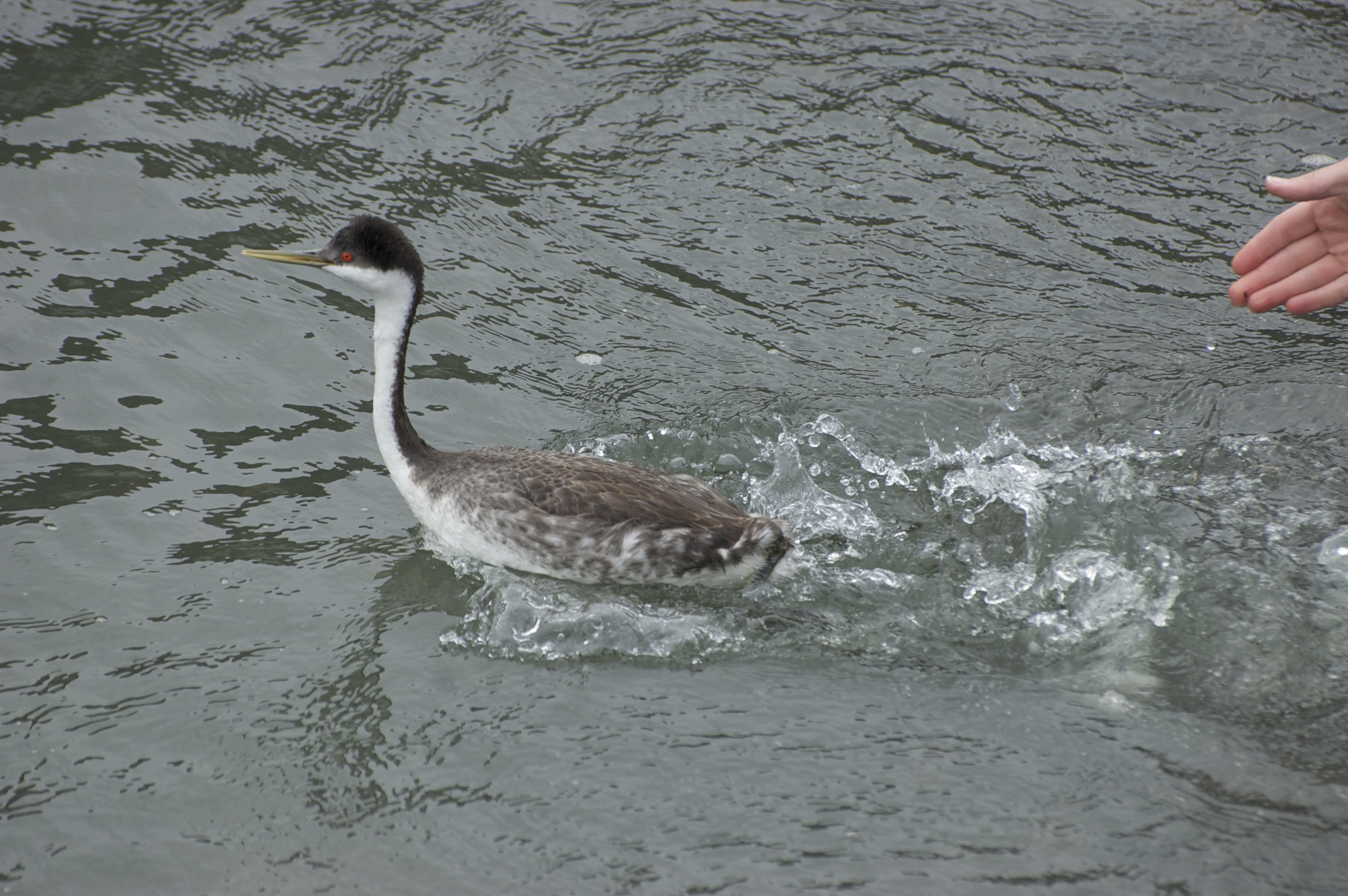
 Release evaluation includes a complete physical examination. The lobed feet of grebes defines their species.
 The freshly healed puncture wound with new feather growth.
 Another happy wildlife rehabilitator!
 Off to resume a life interrupted!
 And making new friends…
 Evaluating feather condition
 A very small amount of blood can tell us a great deal about the patient’s health.
 And away…

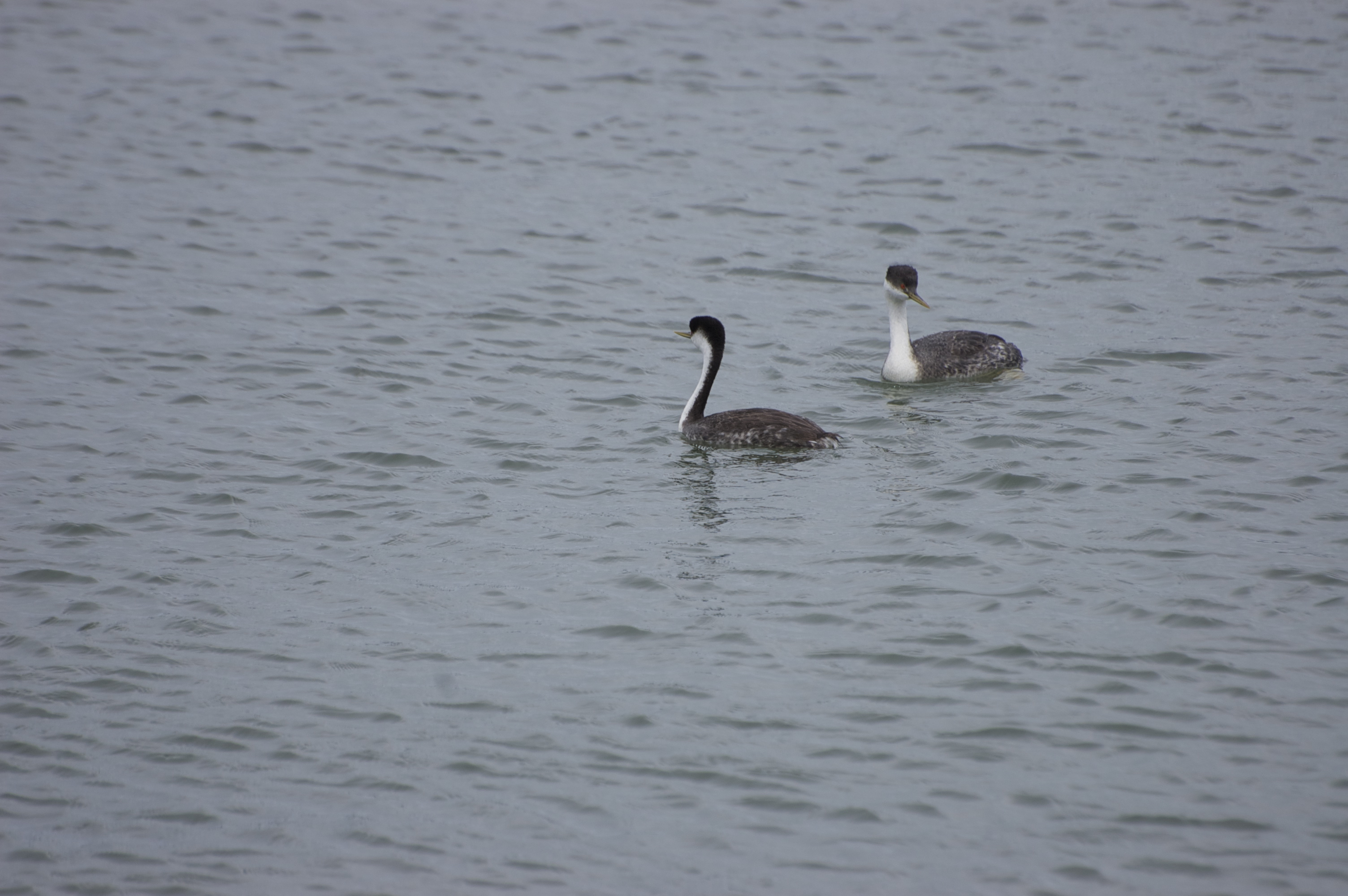
 At this release site, many grebes are already there…